%20.png)
Siding, Drainage & Wall Systems
The siding gives your home its look. The layers behind it help keep the weather outside. A good plan brings both together, from the color you love to the details around every window and door.
A good-looking wall starts behind the finish
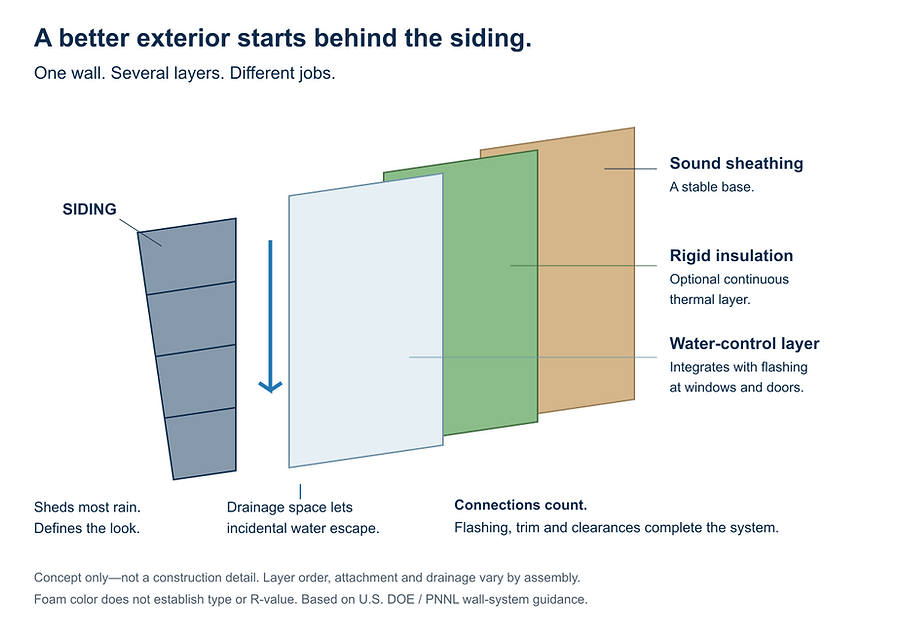
Siding is the outer finish, not the whole weather barrier. Sheathing, the water-control layer, flashing and drainage each have a job. Any water that gets behind the siding needs a path back out. Before covering a damaged area, we want to understand where the moisture came from.
We look closely where materials meet: windows, doors, decks, roof lines and the bottom of the wall. Your proposal should explain the repair process and how new flashing connects to the house. Photos taken before those details are covered give you a useful record of the work.
Repair, refresh or replace?
Start with the condition, not the calendar. Cracked or missing panels, soft wood, loose edges and bulging areas deserve a closer look. A small, isolated problem may be repairable; damage across several walls calls for a broader plan. We check what caused it before choosing the fix.
Faded color or an outdated look can be a reason to refresh your home—not proof that the siding has failed. Peeling paint that keeps returning, damp interior trim or staining needs investigation. Painting over the symptom will not resolve an active moisture problem.
Drafts and higher energy bills deserve a whole-home assessment, too. Air leaks, insulation and other systems can be part of the story; new siding alone is not a promised energy-saving fix.
Then weigh the everyday trade-offs: future upkeep, matching replacement panels, the look you want and how long you plan to stay. If you are preparing to sell, compare a targeted repair or refresh with full replacement. The best scope fits the house and your plans.
Four materials. Different personalities.
Vinyl: A practical, low-maintenance choice with a range of profiles, textures and colors. Look at the panel and trim details as well as the color. Vinyl needs room to move as temperatures change, so the fastening matters.
Engineered wood: Crisp edges and a painted look, with factory-finished and field-finished choices. We’ll help compare profiles and explain how cut edges, joints and transitions will be finished and cared for.
Steel: A strong visual option for horizontal, vertical and accent designs, depending on the collection. Coordinate the profile, finish and accessories, and ask how a damaged panel could be repaired later.
Cedar: Real grain, texture and natural variation. A maintained finish and a weathered look are different goals. The species, grade, profile and exposure all help shape the right finish and care plan.
Find the proportions that fit your home
Horizontal lap draws the eye across a wall. Board-and-batten brings vertical lines. Shakes or shingles can give a gable or entry its own character. Look at the profile against the whole house, not just a sample in your hand.
Choose the corners, window surrounds, soffit, fascia and gutters alongside the siding. View real color samples outdoors on different sides of the house. The roof, texture and changing light can all affect how a color feels.
A small fastening detail makes a difference
The long slots in vinyl’s nail hem let the panel expand and contract. Centered fasteners with clearance under the head allow that movement; pinching the panel tight can cause distortion. The selected product’s instructions set the details. The diagram below shows the basic idea.
What can you improve while the wall is open?
Re-siding may be a chance to address air leaks or add exterior insulation. That can also change the trim, flashing and fastening around windows and doors. We’ll look at how those pieces connect rather than treat added insulation as a stand-alone layer.
Put the whole plan in writing
A useful proposal names the material, profile and finish, then explains removal, repairs, water-management layers, trim, cleanup and warranty responsibilities. You should be able to picture both the finished home and the work behind it.
Further reading: Polymeric Exterior Products Association — Vinyl installation principles
